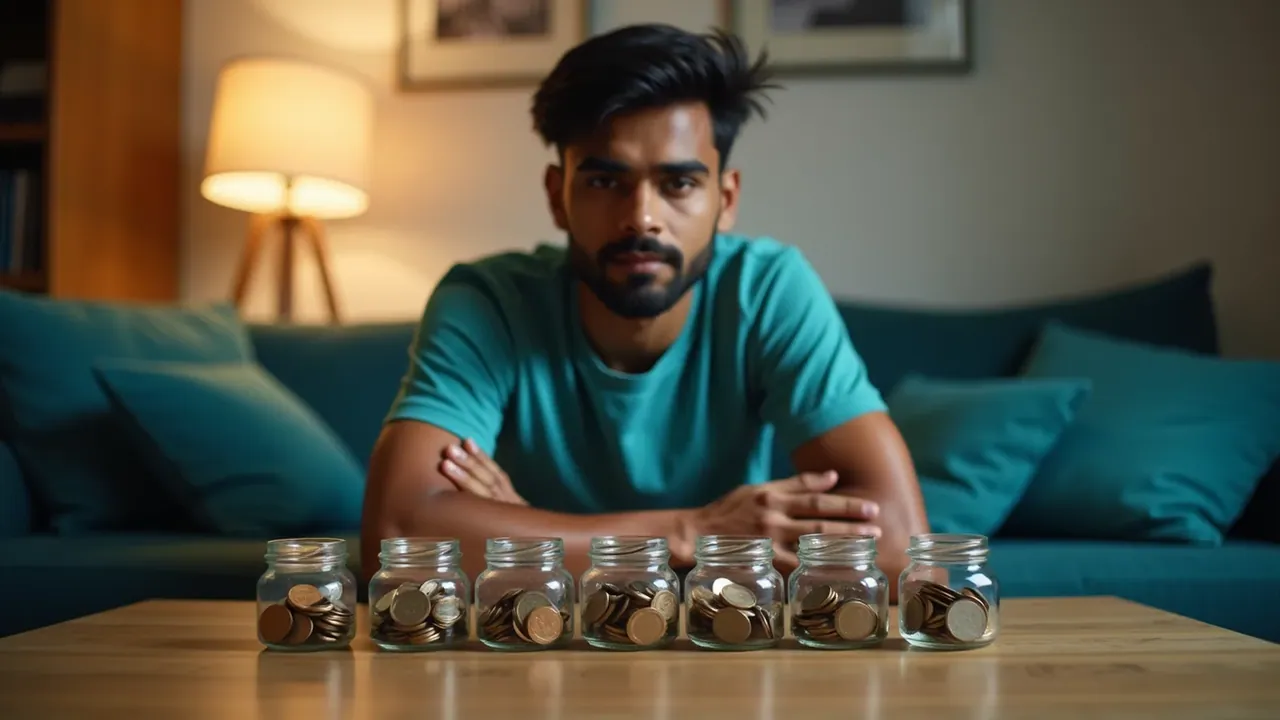
How to Build an Emergency Fund on Irregular Income, Starting From Zero
Starting from nothing feels hopeless because the full target is so far away. Three smaller finish lines make it doable.

Video version: Building a safety net from nothing on freelance income
Coming soon. Everything in the video is in the written guide below.
To build an emergency fund on irregular income, save a percentage of every client payment instead of a fixed monthly amount, and aim for three finish lines in turn: a small starter fund in a few weeks, then one month of essential costs, then your full target. Keep it in a separate account, and send part of any windfall straight there.
"I have no emergency fund at all, and freelancing without one feels risky."
It often hits hardest when an unexpected bill, a dentist or a car repair, goes onto a credit card because there was nowhere else for it to come from.
A starter fund in place within months, then one month of costs, then the full target, so the next surprise bill comes out of savings rather than a card.
Why saving from zero feels impossible
When you look at a full emergency fund target, say six months of costs, and your balance is zero, the distance feels too big to start. Every small deposit looks pointless against it.
Freelance income makes it harder. Standard advice says "save $200 a month", but in a quiet month you may not have $200 spare, and in a busy month $200 feels like too little. A fixed amount fights your income instead of working with it.
The fix is two changes: smaller finish lines, and saving by percentage.
The three stages
Stage 1: a starter fund
A starter fund covers one typical surprise: a repair, a medical bill, a broken laptop. For many people that is a few hundred to about a thousand. Reaching it quickly matters more than the exact number. It is the difference between a bad day and new debt.
Stage 2: one month of essentials
Next, aim for one Minimum Month: the essential costs you would pay in a hard month. This covers a late-paying client or a quiet few weeks.
Stage 3: your full target
Finally, build to your full target, often three to twelve months of essentials. The post on how many months of emergency fund helps you choose the number.
How to build an emergency fund on irregular income
- Open a separate savings account with no card, and name it after the fund.
- Choose a percentage of every client payment to save, such as 5 or 10 percent.
- Move that share the same day each payment arrives, after your tax set-aside.
- Set a windfall rule: half of any unusually large payment above your normal goes to the fund.
- Celebrate each stage when you reach it, then raise your percentage slightly for the next.
- If you use the fund, refill it first before returning to the next stage.
Saving a percentage of each payment
Saving a percentage of each payment means the fund grows faster in good months and gently in quiet ones. It mirrors your Tax Pot habit, so it fits the same moment. The post on saving tax from every invoice shows the routine; this just adds a second transfer.
The windfall rule
A windfall rule decides in advance what happens to an unusually big payment. Without one, extra money drifts into spending. With one, half of it shortens your path to the next stage in a single move.
Dev builds from zero
Dev, 28, is a freelance video editor. When a $640 dental bill went on his credit card, he had no savings. He opened a "Safety net" account and chose 8 percent of every payment, after his tax set-aside. His starter target was $1,000. Over the next ten weeks his payments totalled $8,900, so he saved $712. Then a $2,400 project paid early, above his usual, and his windfall rule sent $600 more. He hit his starter fund in eleven weeks and paid off the card the following month. Dev is fictional; the figures are illustrative.
The fund plan to copy
My emergency fund plan
Account name: ___ (no card)
Saving: ___ % of every client payment, after tax set-aside
Windfall rule: ___ % of any payment over ___ goes to the fund
Stage 1, starter fund: ___ (reached on ___)
Stage 2, one Minimum Month: ___ (reached on ___)
Stage 3, full target: ___ (reached on ___)
If I use it: refill first, then continue
When a quiet month interrupts the plan
Saving by percentage handles quiet months on its own: less money in means a smaller transfer, not a skipped one. If a month brings almost nothing, the transfer may be tiny, and that is fine. Keep the habit going so it restarts on its own when work picks up.
If you have to dip into the fund during a quiet month, that is what it is for. Note the amount, and when income returns, refill the fund before moving to the next stage.
Mistakes when building a fund from nothing
- Aiming straight for six months. The distance is demoralising. Hit the starter fund first.
- Saving a fixed amount. It fails in quiet months. A percentage bends with your income.
- Keeping it in your everyday account. Out of sight is safer. Use a separate account and, if possible, high-interest savings.
- Mixing it with your Tax Pot. Tax money is not emergency money. Keep them apart.
- Feeling you failed when you use it. Using the fund for a real emergency is the point. Refill it and carry on.
- A separate fund account exists, with a clear name and no card.
- The last three client payments each sent a share to it.
- You know which stage you are on and how far away the next one is.
- The last surprise bill came out of the fund, not a card.
- If the fund is not growing, check the transfers are actually happening before changing the percentage.
This is general information, not financial advice. If debts are building up, a free debt advice service can help you plan the order of saving and repaying. The pillar on freelancer emergency funds covers where to keep the fund and what counts as an emergency, and a slow first month is a good example of when it helps. The free Money Reset kit helps you count the Minimum Month behind Stage 2.
Key takeaways
- Three finish lines, starter, one month, full target, make saving from zero doable.
- Save a percentage of every payment, so the fund bends with your income.
- A windfall rule turns big payments into big steps.
- Use the fund for real emergencies, then refill it first.
Questions people ask
How do I build an emergency fund on irregular income?
Save a percentage of every client payment rather than a fixed monthly amount, so you save more in good months and less in quiet ones. Aim first for a small starter fund, then one month of essential costs, then your full target. Keep it in a separate account, and send part of any unexpectedly large payment straight to it.
How much should a starter emergency fund be?
Many people pick an amount that would cover a typical unexpected bill, such as a car repair, a dental bill or a broken laptop. For many that is somewhere between a few hundred and a thousand or so, but it depends on your costs. The point is a quick first win that keeps small emergencies off a credit card.
Should I pay off debt or build an emergency fund first?
Many people build a small starter fund first, so new emergencies do not add to their debt, then focus on paying down high-interest debt, then return to building the full fund. The right order depends on your interest rates and situation. A free debt advice service or a qualified adviser can help if debt feels heavy.
Where should I keep my emergency fund?
In a separate, easy-access savings account in your name, ideally one that pays interest and has no card attached. It should be quick to reach in a real emergency but not so visible that it gets spent on everyday things. Keep it apart from your Tax Pot, which belongs to the tax authority.
Not financial or tax advice
FreelancerSave is educational and is not financial, tax, legal or investment advice. Tax rates and percentages are examples only; your real figures depend on your country, income and situation, so confirm them with an accountant or your tax authority. Examples are composites and results vary. Read the full disclaimer.

Free starter kit
Count the Minimum Month your fund is built on
In 30 minutes you finish with your real Minimum Month number, a tax set-aside percentage, a separate Tax Pot account and your first three-way money split.