Bookkeeping for Beginners: A Freelancer's Four-Column Record From Day One
Books do not need software or training to start. They need four columns, one folder and ten minutes a week.

Video version: Your first freelance bookkeeping setup in ten minutes
Coming soon. Everything in the video is in the written guide below.
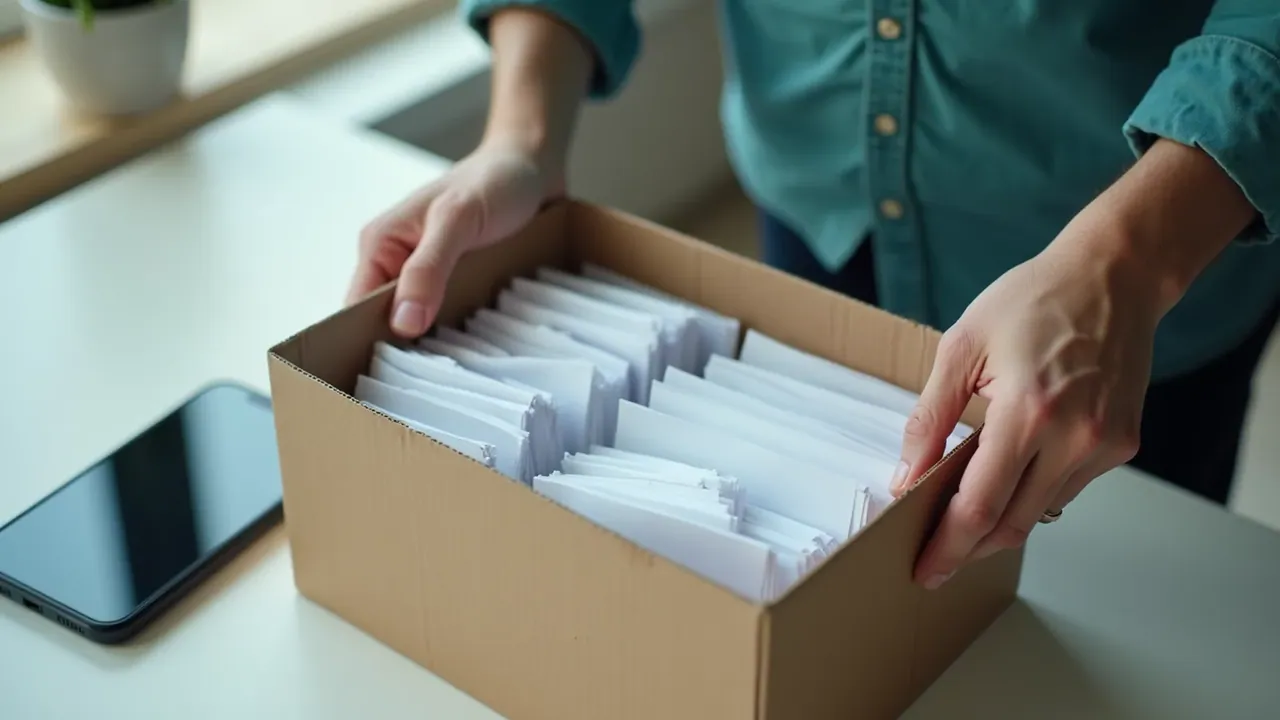
Bookkeeping for beginners who freelance can start with a spreadsheet of four columns: date, who, amount and what for. Every client payment and business expense goes in a row. Every receipt goes into one folder per month. Ten minutes on the same day each week keeps both current, and that is genuinely enough for most first-year freelancers.
"I've never kept books and I don't know where to start."
It usually comes into focus when an accountant, or a tax form, asks for "your income and expenses for the year", and you realise you have no list of either.
A simple four-column record and a receipts folder, kept current from day one, so "income and expenses for the year" is a total you can read off rather than a month of digging.
Why bookkeeping feels harder than it is
The word itself sounds technical. It conjures up ledgers, debits and credits, and software with a dozen menus. Most freelancers who have never done it assume they need training first.
For a first-year freelancer, bookkeeping is just a list. It records money that came into the business and money that went out, with enough detail to explain each line later. Accountants use more structure, but the raw material they need is the same list you can build in a spreadsheet tonight.
The hard part is not the method. It is starting late and having to reconstruct months from memory. Starting early avoids that entirely.
The four-column record
Your four-column record has one row per transaction:
| Date | Who | Amount | What for |
|---|---|---|---|
| 03 Mar | Client A | +2,400 | Website copy, invoice 2026-004 |
| 05 Mar | Software company | -24 | Design tool, monthly |
Income is positive, expenses negative. Add a fifth column for category later if you like, such as software, equipment or travel. That is optional at first.
A spreadsheet is the easiest place for it. A notebook works too, if you prefer paper, but it is harder to total.
Set up bookkeeping for beginners in one evening
- Create a spreadsheet with four columns: date, who, amount and what for.
- Add every client payment and business expense since you started, using your bank statements.
- Make a receipts folder with one subfolder per month, on your computer or in cloud storage.
- Save any receipts you can find into the right month.
- Pick a weekly bookkeeping slot, such as Friday at 4pm, and put it in your calendar.
- At the end of each month, total income and expenses and write both at the bottom.
Your weekly ten minutes
Each week, open your business account and add any new lines to the sheet. Save new receipts into the month's folder. That is the whole routine. The pillar on bookkeeping in 20 minutes a week turns this into a Friday habit with a monthly close.
Receipts
The receipts folder is your proof. Keep it simple: one folder per month, files named with the date and supplier. The post on keeping track of receipts shows a same-day capture habit.
Jun starts her books in March
Jun, 26, is a freelance UI designer who started in January. In March her accountant asked for her income and expenses so far. She had nothing written down. That evening she made a four-column sheet and went through her business account: 9 client payments and 23 expenses. She found 17 receipts in her email and photographed four paper ones. It took two hours. From then on, Friday at 4pm became her bookkeeping slot, and it rarely took more than 12 minutes. Jun is fictional; the details are illustrative.
A starter checklist to copy
My bookkeeping setup
Record: four-column sheet saved at ___
Receipts: folder at ___, one subfolder per month
Weekly slot: ___ day at ___ time
Monthly close: total income ___ and expenses ___ on the last ___ of the month
Business account only? yes / no (if no, see the untangling guide)
Records kept for: ___ years (check your tax authority's rule)
If your money has been mixed so far, start with untangling mixed business and personal expenses, then begin the sheet from your clean-line date.
When to move from a spreadsheet to software
A spreadsheet stops being enough when the weekly ten minutes keeps stretching past half an hour. That usually happens when you send many invoices, buy from many suppliers or must charge sales tax or VAT. Some tax authorities also require digital records in a set format once you pass a threshold.
When you switch, keep the habit and change only the tool. Import your spreadsheet, keep the same weekly slot and the same monthly folders. The routine is what keeps the books current, not the software.
Beginner bookkeeping mistakes
- Waiting until you can afford software. A free spreadsheet is enough to begin. Bookkeeping software can come later.
- Recording only income. Allowable business expenses usually reduce your taxable profit, so missing them can mean paying more tax than you need to.
- Mixing personal spending in. Only business lines belong in the record.
- Leaving it for months. You will forget what things were. Weekly keeps it easy.
- Deleting old records. Keep them for as long as your tax authority requires, often several years.
- Your four-column sheet exists and is up to date to within a week.
- Every month has its own receipts folder.
- Your weekly slot is in your calendar and you used it last week.
- You can tell someone your income and expenses for the year so far within a minute.
- If you miss a week, do two weeks next time rather than abandoning the habit.
This is general information, not tax advice. Rules on what records to keep, and in what format, vary; your tax authority's self-employed guidance is the source, and an accountant can confirm it. Once your records exist, knowing what freelancers can write off helps you categorise expenses sensibly. The free Money Reset kit helps you set up the accounts these records describe.
Key takeaways
- Bookkeeping starts as a four-column list: date, who, amount, what for.
- One receipts folder per month holds the proof.
- Ten minutes a week keeps it current; software can wait.
- Starting early saves weeks of reconstruction later.
Questions people ask
How do I start bookkeeping as a freelancer?
Start with a simple spreadsheet with four columns: date, who paid you or who you paid, amount, and what it was for. Add every client payment and business expense to it. Save receipts in one folder per month. Spend about ten minutes a week keeping both current. You can move to software later if your business grows more complicated.
Do freelancers need bookkeeping software?
Not at the start. A spreadsheet works for many first-year freelancers with a handful of clients. Software becomes useful when you have many transactions, need to send lots of invoices, must charge sales tax or VAT, or your tax authority requires digital records. Check whether any digital record rules apply where you live.
What records does a freelancer need to keep?
Generally a record of all business income and expenses, with supporting documents such as invoices you sent, receipts and bank statements. Many tax authorities expect records to be kept for several years after the tax year ends. Your tax authority's guidance for self-employed people says what is required and for how long.
How often should I do my freelance bookkeeping?
Weekly works well for most people: ten to twenty minutes on the same day each week to add new income and expenses and file receipts. Monthly is possible but makes it easier to forget what things were. The goal is that, at any point, your records are no more than a week out of date.
Not financial or tax advice
FreelancerSave is educational and is not financial, tax, legal or investment advice. Tax rates and percentages are examples only; your real figures depend on your country, income and situation, so confirm them with an accountant or your tax authority. Examples are composites and results vary. Read the full disclaimer.
Free starter kit
Set up the money side your records will describe
In 30 minutes you finish with your real Minimum Month number, a tax set-aside percentage, a separate Tax Pot account and your first three-way money split.